
Tractor clutch slipping: where it comes from and what to replace
The engine revs climb, the tractor doesn't follow. Before splitting the machine in two, a few simple checks usually point to the cause.
Contents
- How to tell your tractor clutch is slipping
- Pedal free play: check this first
- Oil on the clutch plate
- A release bearing or fork that doesn’t back off
- A worn clutch plate or a tired pressure plate
- The dual clutch case
- Once it’s split, replace everything in one go
- Habits that wear out a tractor clutch
- Tractor clutch slipping: your questions
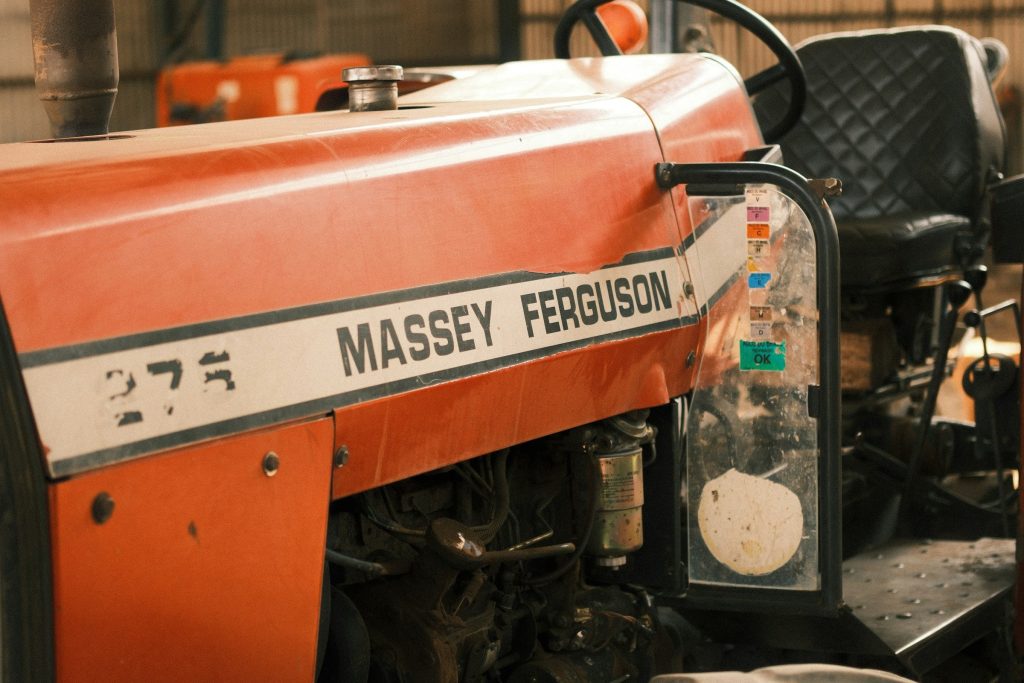
You pull away up a slope with a full trailer, or the plough bites in, and the revs rise while the speed doesn’t. Sometimes there’s a smell of burning coming up from the bell housing. No doubt about it: your tractor clutch is slipping.
The good news is that the clutch plate isn’t always to blame. The bad news is that if you keep working like this, it soon will be, and the pressure plate with it. Here’s how to narrow it down, starting with the checks that cost nothing.
How to tell your tractor clutch is slipping
The signs rarely appear all at once. In the order people usually notice them:
- the tractor struggles under heavy load while the engine itself pulls fine;
- the slipping gets worse once everything is hot, at the end of the day or after a long stint;
- there’s a smell of burnt lining, sometimes with a little smoke around the bell housing;
- on a dual clutch, the PTO slows down under load while the drive stays normal.
That last case is a different story. We’ll come back to it below.
There’s a simple test to tell if your tractor clutch is slipping. Tractor parked on open ground, nobody around, handbrake on and your foot on the brakes: select a high gear, hold the engine at half revs and let the pedal up gently. A healthy clutch stalls the engine. If it keeps running while the tractor stays put, the clutch is slipping. Do it once, not ten times, as every attempt heats the lining.
1. Pedal free play: check this first
It’s the most common cause, and the cheapest to fix. Free play is the distance the pedal travels before the release bearing touches the pressure plate. As the clutch plate wears, that distance shrinks. Once it reaches zero, the release bearing presses on the fingers all the time. The clutch is never fully engaged any more: it slips, and the bearing spins non-stop until it wears out too.
Push the pedal by hand. You should feel some free travel before any resistance. The correct figure is in the workshop manual for your model. If the free play has gone, you restore it by adjusting the linkage, without taking anything apart.
If the free play is back to zero a few weeks after adjusting it, the clutch plate is near the end of its life. Adjusting buys you time, it doesn’t fix the problem.
2. Oil on the clutch plate
An oily plate slips, even a new one. The oil almost always comes from one of two places: the rear crankshaft seal on the engine side, or the gearbox input shaft seal on the transmission side.
Look under the bell housing, at the drain hole or the inspection cover if there is one. Oil runs, or a lining that smells of burnt oil, confirm it.
In that case, replacing the plate on its own is pointless: it will be oily again within weeks. Change the seal at the same time, since the tractor is split anyway. For Deutz 912 engines, for example, we supply the rear crankshaft seal for the F4L 912 as well as the one for the F2L 912.
3. A release bearing or fork that doesn’t back off
Even with the right free play at rest, the release bearing can stay in contact if it sticks on its guide, or if the fork is worn or bent. The symptom is much the same as zero free play, often with a bearing noise as soon as you brush the pedal.
You only see these parts once the tractor is split. If the slipping carries on after adjusting the free play, and there’s no sign of oil, keep this in mind for the day you take it apart. Release bearings, forks and other clutch parts are in our agricultural transmission parts range.
4. A worn clutch plate or a tired pressure plate
If none of the above explains it, what’s left is wear. Either the plate has reached the end of its lining, or it has run so hot that the lining has glazed. The pressure plate loses clamping force when its springs have overheated: it no longer grips the plate hard enough, even a new one.
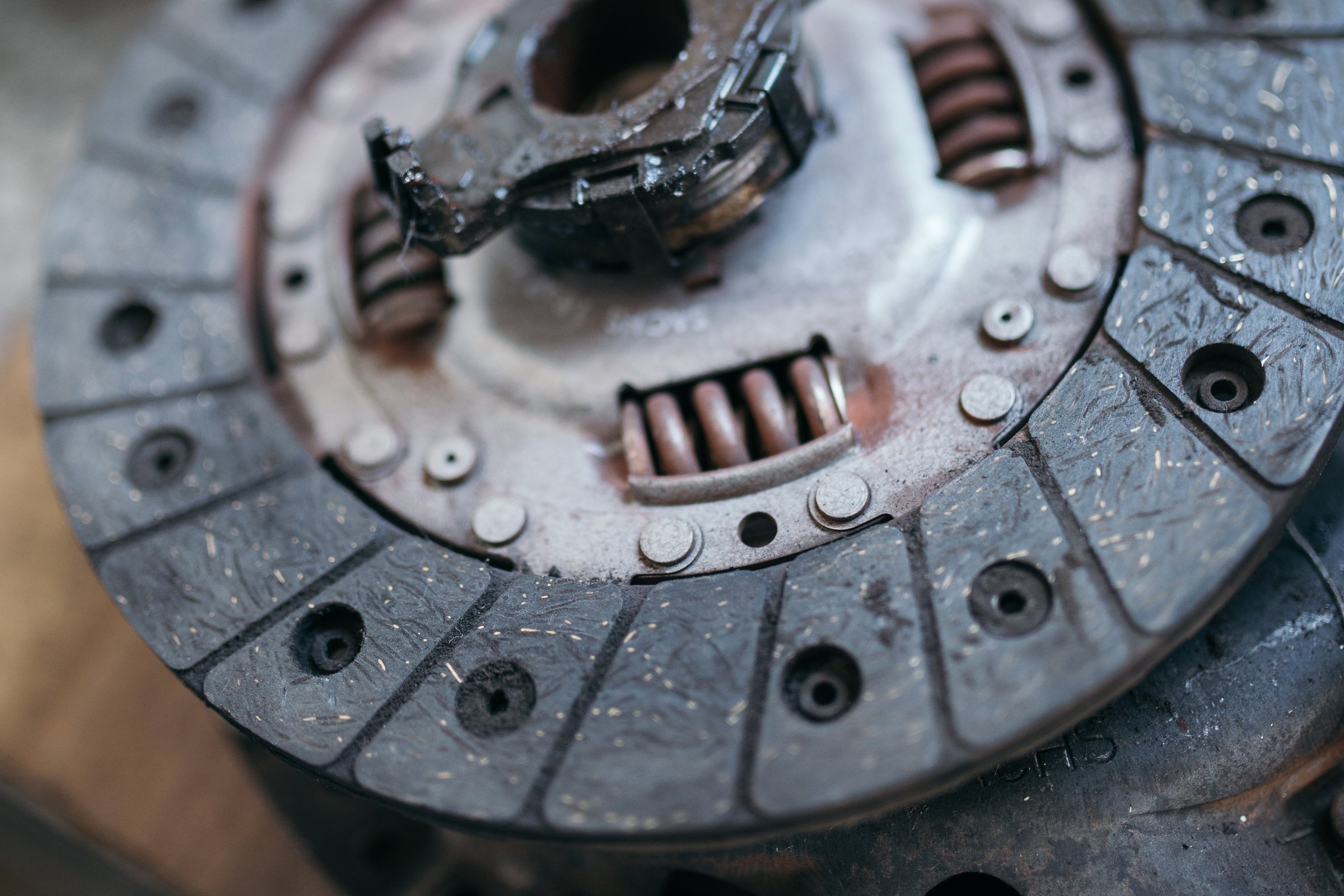
A glazed lining looks smooth and shiny. A worn one shows the rivets, and by then the flywheel may well be scored.
The dual clutch case
On tractors with a dual clutch, such as the Massey Ferguson 440 Xtra, the first part of the pedal travel disengages the drive and the second disengages the PTO. Each plate wears at its own pace.
If the PTO slows under load while the tractor drives normally, look at the PTO clutch disc, not the drive plate. The adjustment of the dual pressure plate matters too: fingers set at different heights make one plate slip and not the other.
Once it’s split, replace everything in one go
Splitting a tractor takes time. More often than not it’s the labour and the days off work that cost money, rather than the parts. Fitting a new plate next to a tired release bearing means you may have to split the machine again a few months later, in the middle of the season.
With the tractor split, the usual checks are:
| Part | What to check |
|---|---|
| Clutch plate | Lining thickness, oil contamination, hub and splines |
| Pressure plate | Springs, finger height, blued or cracked friction face |
| Release bearing | Noise, play, how it slides on its guide |
| Fork and guide | Wear at the contact points |
| Flywheel | Scoring and hot spots, skim if needed |
| Rear crankshaft seal | Any leak, even a slight one |
| Spigot bearing or bush | Play, noise |
For the Massey Ferguson 440 Xtra, we offer the 044704T1 clutch disc, the 3586769M92 dual clutch cover and the 6223296M1 release bearing. Fitments vary with the year and the country where the tractor was built: send us its serial number, or the part numbers stamped on the old parts, and we’ll check everything matches before shipping.
Habits that wear out a tractor clutch
Part of the wear happens in the driver’s seat. The US National Safe Tractor and Machinery Operation Program devotes a whole training sheet to using the clutch pedal properly, and the same habits come up again and again:
- driving with your foot resting on the pedal is enough to make the release bearing rub;
- pulling away loaded in too high a gear heats the plate every single time;
- holding the tractor on a slope with the clutch instead of the brakes wears it out in minutes.
Nothing dramatic. But over a season, the difference shows when you take it apart.
Tractor clutch slipping: your questions
Can I keep working while the tractor clutch is slipping?
For a few days, if you go easy on it. Every slip heats the plate and the pressure plate, and can score the flywheel. The longer you wait, the bigger the bill.
Should I replace the pressure plate along with the clutch plate?
It isn’t compulsory if it’s in good condition. But it has taken the same heat as the plate, and given the work involved in getting to it, most mechanics replace both, along with the release bearing.
How do I find the right clutch plate part number?
The part number is often stamped on the plate hub or on the pressure plate. Note the diameter and the number of splines too. With that information, or just a photo of the old part sent through our contact page, we’ll find the match, even for a part that isn’t in our catalogue yet.